

Each morning at St. Gertrude’s, before attending praise with the sisters, I walked the monastery grounds. The gravel path wound up the mountainside, carrying me past the outdoor stations of the cross — a mirror of those carved into the chapel walls.
Halfway up the trail, nestled among towering Ponderosa pines, stood a grotto built in 1912. The pines were so immense I could not wrap my arms around them; their bark released the sweet, surprising scent of butterscotch. The morning air carried this fragrance, braided with the faint smokiness of distant wildfires.
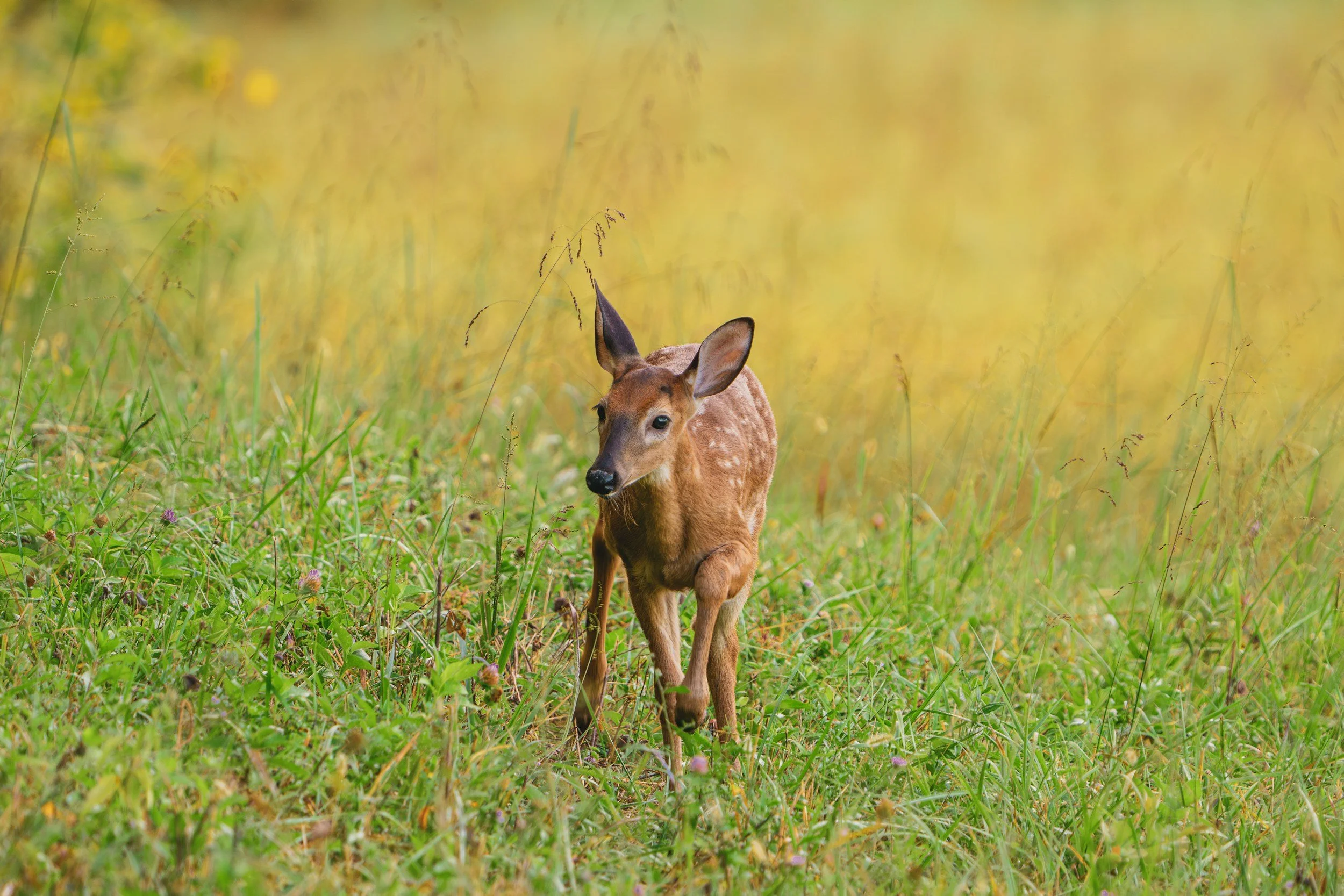
Etched in stone at the grotto were the words Monstra Te Esse Matrem — “Show thyself a mother.” I lingered there often. One morning, a white-spotted fawn appeared in the grotto garden. It didn’t startle or run when it saw me. Instead, it continued along its path about forty feet away, pausing to nibble at the greenery as if my presence was simply part of the morning’s unfolding. We were companions in stillness, each of us keeping to our own quiet way.
The hillside was alive with sound. Birds darted between branches, bees buzzed over wildflowers, dragonflies skimmed the path, and from the chapel below, chanting rose like a low tide, grounding everything in prayer.
From the grotto, the trail carried me to the monastery cemetery, then looped outward through the grotto garden, past a glimmering crystal lake, the “Our Lady of the Pine” cabin, and finally opened into meadow. The walk stretched about 2.5 miles — enough to carry me fully into the day.
But my morning ritual began long before the walk. I woke by gazing at the palms of my hands with thanks before placing my feet on the floor. I hydrated, splashing my face seven times — honoring each chakra as I did. I cared for my mouth, then performed abhyanga with almond oil, frankincense, and Roman chamomile. Just ten minutes of practice followed: kundalini warm-ups to awaken the body, pranayama to clear the energy. Then came the walk, shower, breakfast, and praise.
This rhythm — both monastic and Ayurvedic — revealed its gift in simplicity: days became beautiful and full, not because of achievement, but because of attention.
Ayurvedic Reflection
When we live with rhythm, the nervous system remembers how to rest in wholeness. A morning routine — dinacharya — harmonizes the body with nature’s cycles and gently steadies Vata, the principle of movement that can scatter so easily when we travel.
A Practice for the Journey
Tomorrow morning, before your feet touch the floor, pause. Look at your hands. Offer gratitude for all they will carry and create in the day ahead. Then place them over your heart, inhale, exhale, and begin your day with presence.

Closing Invitation
At St. Gertrude’s I realized once again that beauty lives between the inhale and exhale. To walk with gratitude is to know that the path — whether through pine groves, grotto gardens, or daily rituals at home — is already sacred.
